Kitchen planning
Do You Need a Permit to Remodel a Kitchen? What 14 Building Departments Say
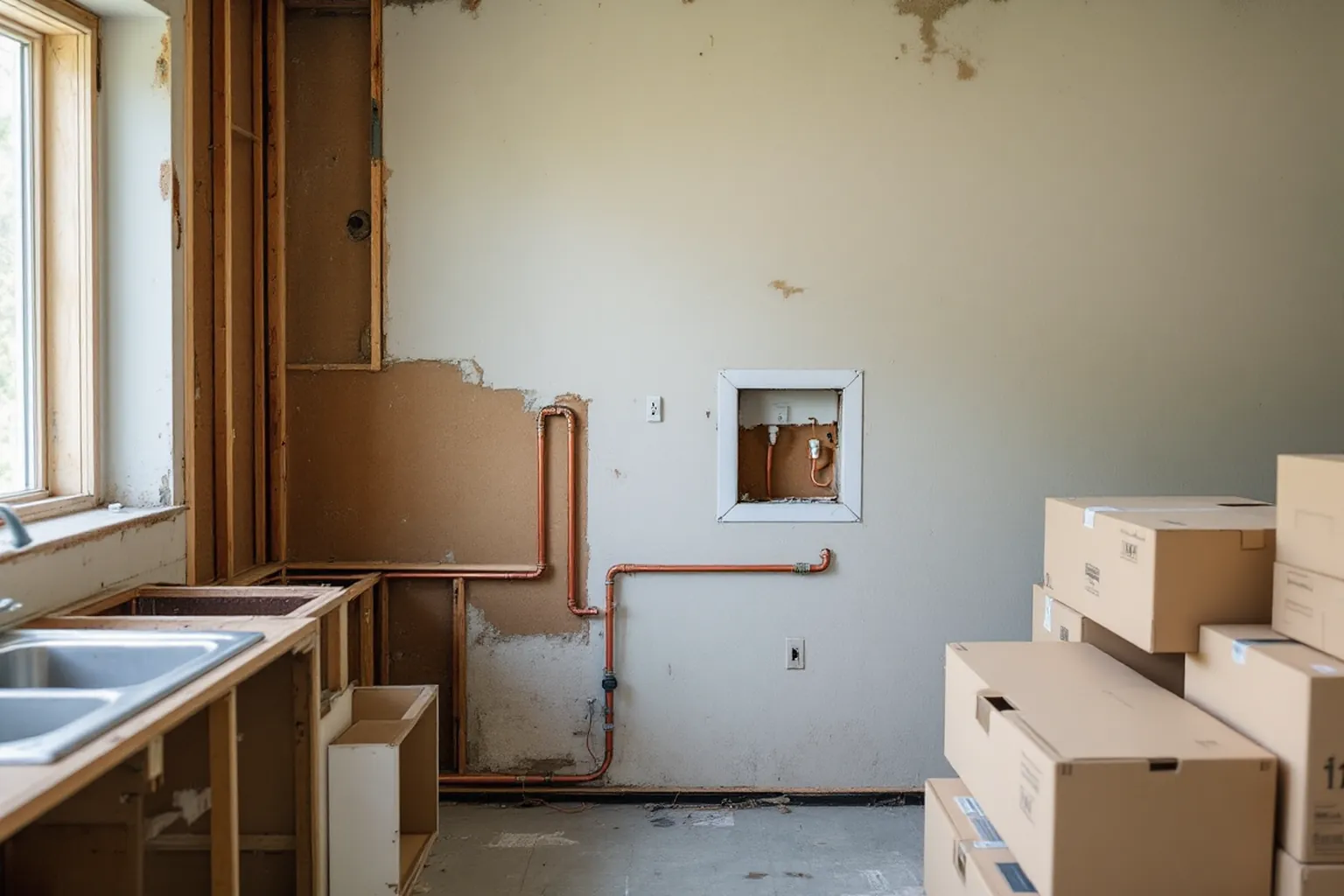
Do you need a permit to remodel a kitchen? Yes, as soon as the job adds or moves plumbing, wiring, gas or ventilation, or touches a wall; usually no if you only swap cabinets and countertops in the same spots. The model code most US towns adopt, the 2024 International Residential Code (R105.2), exempts “painting, papering, tiling, carpeting, cabinets, counter tops and similar finish work”, but not any addition, replacement or relocation of piping or wiring. In our check of 14 city and county building departments’ own exempt lists, 11 let you replace cabinets and countertops without a permit, while 13 say explicitly that moving a sink or running a new circuit needs one, and none exempt it.
The line runs through the pipes and wires, not the cabinets
Building codes do not regulate the boxes and slabs. They regulate what is behind them. The 2024 IRC exempt-work list names cabinets and counter tops as finish work, and in the same section says ordinary repairs never include “addition to, alteration of, replacement or relocation of any water supply, sewer, drainage, drain leader, gas, soil, waste, vent or similar piping, electric wiring or mechanical or other work affecting public health or general safety.”
So the useful question is not “is this a remodel?” but “what crosses the wall?” A kitchen job usually turns into permit work at one of these points:
- The sink, dishwasher, gas range or fridge water line moves, even a few inches (the drain and vent have to be re-run; see the slope math in what it costs to move a sink to an island).
- You add outlets, a circuit for an induction range, under-cabinet lights or a new island, which brings the current GFCI rules for kitchen receptacles into play.
- A wall opens, closes or loses a stud. Load-bearing walls are covered in removing the wall between kitchen and living room.
- A range hood vents outdoors for the first time, or a window or exterior door changes size.
14 building departments, in their own words
We read each department’s own exempt-work list, code section or handout (not contractor blogs) and sorted kitchen work into three scopes. Rows link to the city’s document. Phrases are condensed from the official wording; “Permit” means the item is either named as needing a permit or is absent from a closed exempt list.
| Jurisdiction | Swap cabinets and counters | Replace sink or faucet in place | Move a sink or add a circuit |
|---|---|---|---|
| Houston, TX | Exempt | Permit (fixture swaps need one) | Permit, licensed trade |
| Dallas, TX | Exempt | Exempt if rough-in unchanged | Permit |
| Austin, TX | Exempt | Exempt (fixtures, exposed traps) | Permit |
| Atlanta, GA | Exempt if nothing relocates | Exempt (existing sinks) | Permit |
| Phoenix, AZ | Not named; ask | Exempt if not relocated | Permit, even a new light fixture |
| Charlotte, NC | Exempt up to $40,000 | Exempt if size unchanged | Permit |
| Los Angeles, CA* | Permit for new cabinets | Faucet exempt; new trap needs permit | Permit |
| San Diego, CA | Relocating exempt; in-place swap not addressed | Not on exempt list | Permit |
| Pleasanton, CA | Permit, even like for like | Permit | Permit |
| Seattle, WA* | Usually exempt, $6,000 cap | Counts toward the cap | Not stated; not listed as exempt |
| Chicago, IL* | Exempt without plumbing or electrical connections | Concealed trap or drain pipe needs permit | Permit |
| New York City | Cabinets exempt (counters not named); HIC license | Licensed master plumber | ALT2 permit via PE or RA |
| Minneapolis, MN | Exempt | Exempt (faucets, disposal, dishwasher) | Permit |
| Miami-Dade, FL | Exempt, same configuration | Exempt by licensed plumber | Permit |
Sources: each city’s published exempt-work list or code section, linked in the first column (Houston Permitting Center; Dallas City Code ch. 52; Austin DSD; Atlanta Ord. 17-0-1307; Phoenix Code 105.2; Mecklenburg County and NC G.S. 160D-1110; LADBS/HCIDLA; San Diego IB 203 (2024); Pleasanton (2026); Seattle SDCI; Chicago DOB; NYC DOB; Minneapolis (updated March 2026); Miami-Dade). Compiled and classified by Kitchen and Bath Renovators, November 2026. Rows marked * are from the department’s page as shown in search results; the page blocked automated access on 2026-11-21.
Eleven of 14 exempt the boxes; none exempt a moved sink
Our tally from the table above, counting a city once per column:
- Cabinet and countertop swap, nothing else moves: 11 of 14 exempt it. Los Angeles and Pleasanton require a permit; Phoenix’s handout does not name cabinets at all, so it is a phone call (see the table).
- Sink or faucet replaced in the same place: 7 of 14 exempt it outright (Dallas, Austin, Atlanta, Phoenix, Charlotte, Minneapolis, Miami-Dade), while Houston and Pleasanton require a permit and the rest attach a condition such as a licensed plumber or a dollar cap (see the table).
- Moving the sink or adding a circuit: 13 of 14 say explicitly that it needs a permit, and none exempt it (Seattle’s list is silent, see the table). Phoenix goes further: its exempt-work handout says even replacing an existing light fixture with a new one needs a permit.
The split in the middle column is where homeowners get caught. A new faucet is permit-free in Austin, but the Houston Permitting Center says that “although cabinets are not required to be permitted, any replacement of plumbing fixtures or electrical fixtures will require permits.” Two Texas cities, opposite answers for the same afternoon of work.
Where even a like-for-like kitchen needs paperwork
Pleasanton, California states that “a building permit is required for all new, relocated, or remodeled kitchens” and lists cabinets, countertops, appliances, lighting and plumbing fixtures as typical remodel items. Like-for-like jobs there go through a permit application with no plans required, so the paperwork is lighter, but it exists.
In Los Angeles, a LADBS handout prepared by the city housing department says new cabinets installed in a kitchen or bathroom need a permit, that countertops alone do not unless part of a remodel, and that a faucet swap is exempt while installing a new trap under the sink is not. We could read this handout only through search excerpts, so confirm with LADBS before relying on it.
Seattle takes a different route: a dollar cap. Minor repairs or alterations of $6,000 or less in any 6-month period need no building permit, and SDCI values the job at fair market labor and parts even when you do the work yourself. A DIY cabinet install with $4,000 of boxes can still cross the line once you price your own labor.
Dollar caps from $1,000 to $40,000 decide small jobs
Several places exempt small jobs by value instead of, or in addition to, by task. By our calculation the largest cap is 40 times the smallest ($40,000 divided by $1,000):
- San Diego: repairs with similar materials under $1,000 that do not affect electrical, plumbing or mechanical work (Information Bulletin 203).
- Miami-Dade: owner or contractor work capped at $5,000 in aggregate in any 12 months under its local list (Miami-Dade permit exemptions).
- Seattle: $6,000 in any 6 months (SDCI).
- Florida statewide from July 1, 2026: $7,500 on a single-family property, excluding trade work (Florida Senate summary of HB 803).
- Atlanta: repair work under $10,000 (Atlanta Office of Buildings).
- North Carolina: $40,000 or less in a single-family home, unless one of six exceptions applies (NC Office of State Fire Marshal guidance on G.S. 160D-1110(c)).
A cap does not rescue a job that moves pipes. Every one of these carve-outs excludes plumbing, electrical or structural changes. If the job is permit work, the next two questions are fees and wait times; our research on what a building permit costs in the largest US cities and how long remodel permits take to issue covers both, city by city.
Florida's $7,500 exemption stops at the plumber
Florida’s new law, HB 803, tells local governments outside flood hazard areas to exempt “work on single-family residential property valued at $7,500 or less,” excluding “any electrical, plumbing, structural, mechanical, or gas work,” effective July 1, 2026. In a kitchen that means a small cabinet or countertop job is permit-free statewide, but the plumber reconnecting the sink still needs a plumbing permit unless a local trade exemption applies. Some cities ask for a written exemption request first, and projects cannot be split to stay under the number.
Before the law, many Florida counties already exempted cabinets. Miami-Dade exempts “kitchen cabinets, vanities or paneling replacement inside residential units using same configuration,” and says associated plumbing, ventilation and electrical work needs a permit if relocated, reconfigured or altered. Faucet and sink replacement is exempt there only when a licensed plumbing contractor does it.
Texas leaves the list to each city
Texas has no statewide remodel permit list. Cities adopt their own codes and exemptions, which is why the three Texas cities in our table disagree on fixture swaps. Outside city limits, the county building standard in Texas Local Government Code 233.153 is written for new single-family houses and duplexes, not remodels, so rural kitchen jobs often have no building permit at all. Licensed-trade rules still apply either way.
- Dallas: cabinets, countertops and “replacement in kind” of fixtures with no rough-in change are exempt; the exemptions do not automatically apply in historic or conservation districts (Dallas City Code ch. 52).
- Austin: cabinets, countertops and fixture replacement are exempt, and its express permit for kitchen remodels covers jobs where walls and plumbing fixtures stay put (Austin express permits).
- Houston: cabinets and countertops exempt, any plumbing or electrical fixture replacement permitted, and each licensed trade buys its own permit (Houston Permitting Center).
Sort your own kitchen job in five questions
- Step 1
Does any pipe, wire, duct or gas line move or get added?
If yes, none of the jurisdictions we checked exempt it, and most require the trade contractor to pull it. Stop here and call the building department (IRC R105.2).
- Step 2
Does a wall, window or exterior door change?
If yes, it is permit work, and a load-bearing wall usually needs drawings from an engineer as well.
- Step 3
Are you only replacing boxes and tops in the same footprint?
Usually exempt, but check your city’s list: Los Angeles and Pleasanton are exceptions in our table, and Chicago exempts cabinets only “without plumbing or electrical connections” (Chicago DOB).
- Step 4
Is the sink, faucet or dishwasher being disconnected and reset?
This is the gray zone. Look for the words “replacement in kind” or “no change in rough-in” on your city’s exempt list, and note whether a licensed plumber must do it.
- Step 5
What is the total job worth?
If your city or state uses a dollar cap (Seattle, Atlanta, Florida, North Carolina), add materials and fair market labor. North Carolina’s limit is $40,000 (NC OSFM).
Pulling a homeowner permit and doing the work yourself
Most cities let an owner-occupant pull their own permit and do the work, with strings that matter:
- Dallas lets homeowners act as their own contractor on their homestead; electrical work requires passing a city exam (Dallas homeowner exemption).
- Arizona’s owner-builder exemption requires the home to be for your own occupancy and not offered for sale or rent within one year of completion (A.R.S. 32-1121).
- Mecklenburg County lets owners do their own electrical, mechanical and plumbing work only on a primary residence they own, if they perform all the work themselves (Mecklenburg Residential Permits Quick Guide).
- New York City says most kitchen renovations need an ALT2 permit filed by a licensed engineer or architect, and rerouting gas pipes or adding outlets is listed permit work (NYC Department of Buildings).
One federal rule applies with or without a permit: in a home built before 1978, a paid contractor disturbing painted surfaces must be lead-safe certified under the EPA Renovation, Repair and Painting rule. Our RRP rule explainer covers the thresholds. If you hire out the work, the permit is a useful test of a contractor; our guide on how to choose a remodeling contractor explains why the person pulling it matters.
What skipping the permit costs when it surfaces
The penalty most homeowners meet is not a fine but a bigger fee. Codes based on the IRC let the building official charge an investigation fee on top of the normal permit when work starts first. Two published examples:
- Olathe, Kansas sets the investigation fee equal to the permit fee, so the permit costs double (Olathe Municipal Code 15.02.190).
- Washoe County, Nevada charges twice the permit fee, and up to four times when a licensed contractor did the work (Washoe County Building).
The other costs arrive later. An inspector reviewing after-the-fact work can ask you to open finished drywall to see wiring and drain connections. Buyers’ inspectors and appraisers compare the house to permit records, and an insurer looking at a water or fire claim may ask whether the work that failed was permitted. If a kitchen renovation is part of creating a separate living unit, the rules change again; our ADU permit research shows how cities handle a second kitchen.
This page is general information, not legal advice. Your building department’s current list is the only answer that binds.
Frequently Asked Questions
What happens if you do a kitchen remodel without a permit?
If the building department finds out, it can stop work and require an after-the-fact permit, often with an investigation fee: Olathe, Kansas sets it equal to the permit fee (Olathe code) and Washoe County, Nevada at twice the fee (Washoe County). Inspectors may ask you to open walls. Unpermitted work can also come up when you sell or file an insurance claim.
Can I do my own kitchen renovation?
Usually yes, on a home you own and live in, by pulling an owner permit. Conditions vary: Arizona’s owner exemption requires that you not sell or rent the home within one year of completion (A.R.S. 32-1121), and Dallas requires homeowners to pass a city exam before doing their own electrical work (City of Dallas).
Do you need a permit to remodel a kitchen in Florida?
For plumbing, electrical, gas, mechanical or structural work, yes. From July 1, 2026, other work on a single-family property valued at $7,500 or less is exempt statewide outside flood hazard areas (Florida Senate, HB 803), and counties such as Miami-Dade already exempted cabinet replacement in the same configuration (Miami-Dade).
Do I need a permit to remodel my kitchen in Texas?
It depends on the city. Dallas, Austin and Houston all exempt cabinets and countertops, but Houston requires a permit to replace plumbing or electrical fixtures (Houston Permitting Center) while Dallas exempts in-kind fixture swaps with no rough-in change (Dallas City Code ch. 52). Moving plumbing or adding wiring needs a permit in all three.
Do you need a permit to replace kitchen cabinets?
Not in most places: the 2024 IRC exempts cabinets and counter tops as finish work, and 11 of the 14 departments we checked follow suit. Los Angeles and Pleasanton, California are exceptions, and moving any outlet or plumbing fixture during the swap changes the answer.
Sources
- City of Benson, Arizona, Work not requiring a Permit, according to the 2024 IRC (R105.2) (undated)
- Houston Permitting Center, Permit guidance document (media/10131)
- City of Dallas, Chapter 52, Administrative Procedures for the Construction Codes, Sec. 301 (2024)
- City of Dallas, Homeowner's Exemption from Registration as a Contractor
- City of Austin Development Services, Work Exempt from Building Permits (2026)
- City of Austin Development Services, Express Permits
- City of Atlanta Office of Buildings, Work Exempt from a Permit (Ordinance 17-0-1307) (2017)
- City of Phoenix Planning and Development, Work Exempt from Permit (TRT/DOC/00618) (2014)
- Arizona State Legislature, A.R.S. 32-1121, Persons not required to be licensed
- Mecklenburg County Code Enforcement, Permitting
- NC Office of State Fire Marshal, Guidance Paper: G.S. 160D-1110(c) Construction Permit Exceptions (2023)
- Mecklenburg County Code Enforcement, Residential Permits Quick Guide (undated)
- LADBS (prepared by HCIDLA), Common Permits (undated)
- City of San Diego Development Services, Information Bulletin 203, No-Plan Building Permit (2024)
- City of Pleasanton Building and Safety, Residential Kitchen Alteration Requirements (2026)
- Seattle Department of Construction and Inspections, Do You Need a Permit?
- City of Chicago Department of Buildings, What Types of Work Do Not Require a Building Permit?
- NYC Department of Buildings, Renovating Kitchens and Bathrooms
- City of Minneapolis, Construction work exempt from permit (2026)
- Miami-Dade County, Permit Exemptions (2025)
- The Florida Senate, CS/CS/HB 803 (2026) Bill Summary (2026)
- Texas Legislature, Local Government Code Chapter 233
- City of Olathe, Kansas, Municipal Code 15.02.190
- Washoe County Building, Work Done Without Permits
- US EPA, Lead Renovation, Repair and Painting Program Rules